
America’s Next Project
The elite rescue that saved England – and why the US will need one too
Grüezi!
Lots going on right now, but rather than surf the frenzy, I thought it might be worth looking at what needs to happen after the deluge.
1. The Reckoning to Come
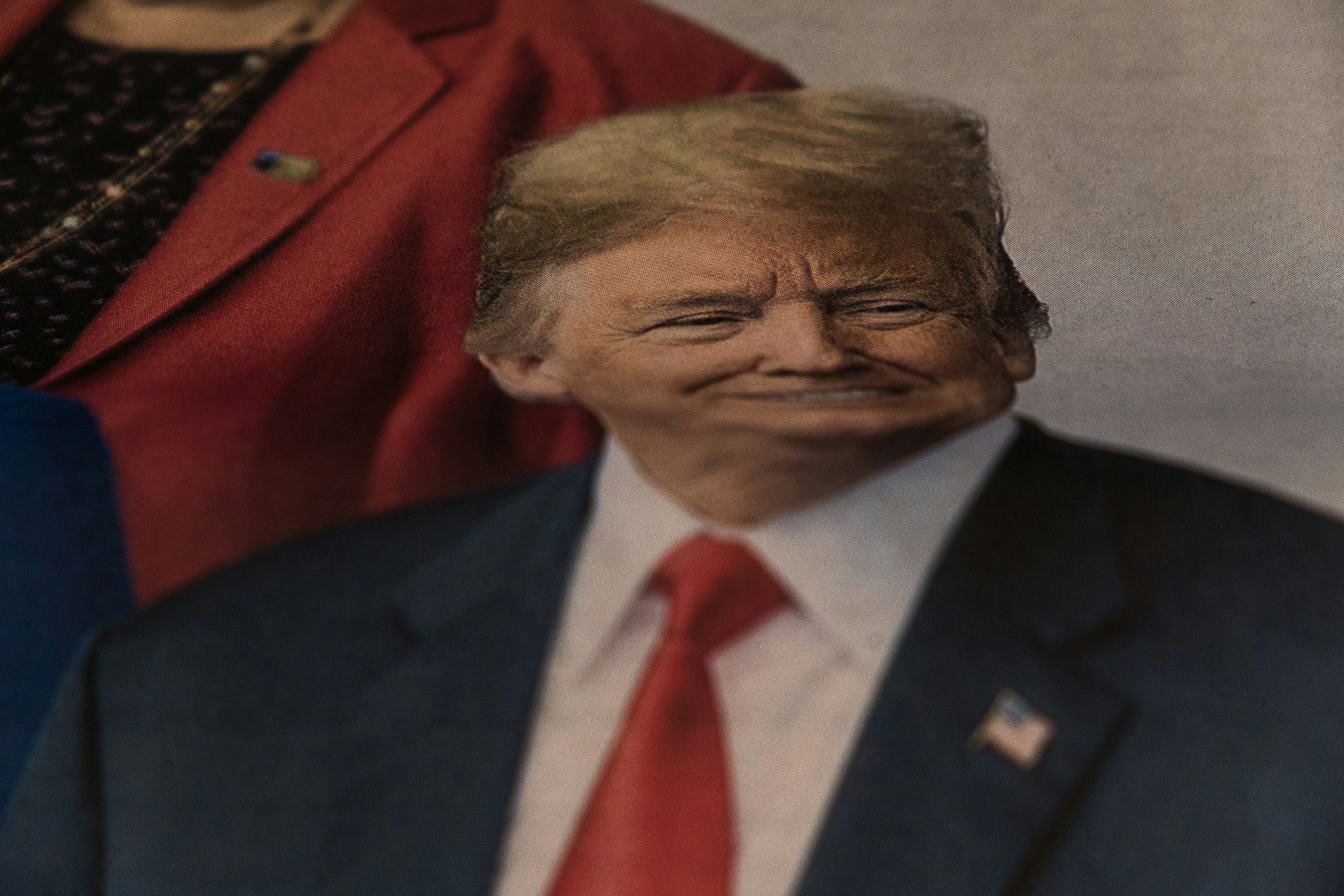
When Donald Trump leaves office – term limits, health, or political defeat – there will be a reckoning.
Not legal; America’s courts have demonstrated their inadequacy. Not political; his party has made its accommodation.
The reckoning will be institutional: a confrontation with the fact that the American constitutional order was designed to prevent a president from selling his office to the highest bidder, and that it failed.
In the first nine months of his second term, Trump’s net worth increased by approximately $3.4bn. The sources vary but they share a common thread: foreign actors purchasing access through the president’s personal business interests.
A $400m Qatari Boeing 747 destined for Trump’s post-presidential foundation. Cryptocurrency ventures capitalised substantially by foreign nationals—one Chinese-born billionaire alone invested over $75m.
Gulf-backed golf tournaments at Trump properties. The president’s own memecoin, launched the day before inauguration, with a majority of top purchasers appearing to be foreign nationals.
The transaction is not new. It is very old – and the constitutional prohibition against it was written by men who knew exactly what they were trying to prevent.
2. The Original Sell-Out
On 1 June 1670, in the old stone keep at Dover, England’s Protestant king, Charles II, signed a secret treaty with his opposite number in Catholic France, Louis XIV. The public version committed England to an alliance with the French against the Dutch Republic.
The private version – known to only a handful of men in England – contained two additional clauses: Charles would declare himself a Catholic when circumstances permitted. In exchange, Louis would pay him £230,000 per year and provide a few thousand French troops should Charles’s subjects resist.
In today’s cash, Louis was giving Charles somewhere between £35m and £50m annually – a personal backhander direct from a foreign sovereign.
The money freed Charles from his dependence on Parliament, which controlled taxation. He ruled his last four years without ever bothering to summon one.
The transaction’s cynicism ran both ways. Charles almost certainly never intended to convert publicly. He took Louis’s money, stalled on the religious commitments, and pursued a pro-French foreign policy that served neither English commercial interests nor Protestant Europe.
Louis got a bit less than he paid for. Charles got exactly what he wanted. The treaty remained a secret a century.
3. The Founders Knew
The framers of the US constitution knew this story only too well. Their ambassador to France had been handed a few hundred diamonds as a parting gift by Louis’s grandson.
The Emoluments Clause of Article I – forbidding any person holding federal office from accepting ‘any present, Emolument, Office, or Title, of any kind whatever, from any King, Prince, or foreign State’ without congressional consent – was drafted by men who had watched European monarchs sell themselves to the highest foreign bidder.
St George Tucker, in his authoritative early commentary on the Constitution, explained:
‘Charles the Second of England, that prince, and almost all his officers of state were either actual pensioners of the court of France, or supposed to be under its influence.’
Charles II was the original cautionary tale.
The founders believed they had solved the problem through constitutional architecture.
They were wrong – not because the clause was poorly drafted, but because enforcement depends on institutions that a corrupt executive and its allies can capture, coerce, or crush.
Courts defer to executive privilege. Prosecutors report to the Justice Department. Congress is partisan. Media are bought and sold.
The Supreme Court dismissed emoluments litigation against Trump’s first term as moot once he left office, establishing that a president can violate the clause for four years without consequence provided he eventually departs.
4. The Repeat Offenders
Why does the pattern repeat? Because the incentives remain stable. A head of state commands assets that foreign powers wish to influence: military deployments, trade policy, regulatory decisions, diplomatic recognition, sanctions enforcement.
A head of state with personal business interests has a price mechanism already in place. The only question is whether domestic institutions can make the transaction costly enough to deter it.
Ferdinand Marcos extracted an estimated $10bn from the Philippines over two decades, with substantial holdings laundered through New York real estate and Swiss banks.
American interests in Philippine bases outweighed concerns about presidential theft. The Reagan administration maintained its relationship until Marcos’s own position became untenable.
Mobutu Sese Seko ran Zaire as a personal asset for 32 years, with Western governments and the IMF providing the foreign exchange that he systematically looted. A Cold War kleptocrat who kept his country out of the communist orbit was preferable to the alternative.
Silvio Berlusconi intertwined his business empire with his office across four terms as Italian prime minister. Russian gas deals, Libyan contracts, and a judicial system that he manipulated to shield himself from prosecution created a template subsequent populists studied carefully.
He faced dozens of indictments; his supporters treated each as evidence of persecution rather than corruption.
And he died in 2023 having served more time as prime minister than any post-war Italian leader.
5. Who Sanctions the Sanctioner?
The global anti-kleptocracy measures that have been developed since 2012 – Magnitsky sanctions, beneficial ownership registries, unexplained wealth orders – were designed to deal with corrupt leaders in weak states extracting wealth and parking it in strong states with reliable property rights.
Belgravia mansions. Delaware shell companies. Swiss bank accounts. The enforcement mechanisms assumed that the destination jurisdictions had functioning institutions willing to freeze assets and deny visas.
This legal architecture has no answer for the inverse case.
When the leader of the principal sanctioning power is monetising sovereign authority, the system faces a problem it was not designed to solve.
Who sanctions the sanctioner?
6. Elite Rescue
Charles got away with it. He died in bed in 1685, received into the Catholic Church on his deathbed, his French subsidies having purchased a decade of rule without the annoyance of parliamentary interference.
His brother James, who succeeded him and lacked Charles’s political cunning, was deposed within three years – but not by England’s institutions.
In June 1688, seven men – bishops, aristocrats, a Whig grandee – signed a letter inviting William of Orange to invade England with a foreign army. They were not revolutionaries. They were men of property and position who had concluded that working within the system was no longer viable.
William landed at Torbay in November with 15,000 Dutch troops. James fled to France. Parliament, presented with a fait accompli and a vacant throne, extracted constitutional concessions that James would never have granted: the Bill of Rights, parliamentary supremacy, regular elections, constraints on royal prerogative.
If you want some idea of the shock to the system, imagine Mark Carney and a small Canadian force arriving to claim the White House and restore Congress.
The Glorious Revolution was an elite project that welcomed a foreign power to achieve what domestic institutions could not. The constitutional reconstruction that followed was possible only because the old regime had collapsed and the new one needed legitimacy.
William accepted the limitations because he needed Parliament; Parliament secured reforms because it had leverage. The settlement worked not because the system self-corrected but because a small group of desperate men broke it open and rebuilt it in the interregnum.
Marcos fled the Philippines in 1986 only after the Reagan administration withdrew support – external pressure enabled internal change. His son is now president; the post-Marcos reconstruction was not thorough enough to prevent a dynastic restoration.
Berlusconi was eventually convicted in 2013, but Italian institutions had been too corroded to deliver reforms that mattered. His political heirs govern Italy today.
The stables were never cleaned.
7. The Immortal Seven
The American constitution was designed to make a Glorious Revolution unnecessary – to build a self-correcting system that would not require elite conspiracies, foreign leverage, or regime discontinuity to constrain a corrupt executive.
The separation of powers, the emoluments clause, impeachment, regular elections: these were meant to be sufficient.
They have not been. The question now is what comes after.
When Trump leaves office, there will be a window of the kind that opened in 1688: a moment when the old dispensation has been discredited but the new one has not yet consolidated.
What happens in that window will determine whether American institutions are rebuilt to prevent recurrence or merely patched until the next kleptocrat.
The Glorious Revolution required the “Immortal Seven” – superheroes in powdered wigs – men willing to sign their names to an act of treason in service of institutional reconstruction.
The American equivalent would be an elite coalition of institutionalists – judges, former officials, civil society, perhaps business leaders with something to lose from continued disorder – prepared to use the post-Trump moment not for restoration but for reform.
Supreme Court restructuring. Emoluments enforcement with teeth. Executive ethics law that actually applies to the president. Pardon power constraints. The whole architecture that failed, rebuilt.
This is not a democratic project in the simple sense. The Glorious Revolution was not put to a vote. It was an elite rescue operation that acquired popular legitimacy retrospectively, through the settlement’s success.
The American reconstruction – if it comes – will likely follow the same pattern: a conspiracy of the responsible, acting in a window of opportunity, building institutions the public comes to value only after they work.
The alternative is the Marcos–Berlusconi pattern: a corrupted system that survives its most egregious occupant, remains unreformed, and eventually produces something worse.
Thanks for reading!
Best
Adrian


Gives me something to look forward to this coming year. May a similar undertaking be the silver lining we've all been looking for!