

India’s Kitchen Crisis: How the Hormuz Closure Has Turned Into an Energy Nightmare
From cooking gas shortages to stranded solar power, the war on Iran has exposed every vulnerability in India’s multi-alignment bet


Grüezi!
1. The Tidal Waiver
In February 2026, India cut a deal with Washington: it would stop buying discounted Russian crude, commit to $500 billion in US goods over five years, and get tariffs on its goods cut from 50% to 18%.
Reliance and the state refineries duly began winding down their Russian orders, shifting toward the Gulf suppliers Washington preferred – Saudi Arabia, Iraq, and the UAE.
To further cement this new alignment, India elevated its ties with Israel to a “special strategic partnership” during Modi’s February visit to Netanyahu.
Three weeks later, the US and Israel struck Iran.
The Strait of Hormuz closed. The Gulf supply India had just redirected toward was cut off. Oil soared past $100.
And then, in just days, the US Treasury gave India a 30-day sanctions waiver to buy the exact same Russian oil it had just agreed to forego.
Indian refiners have since bought 30 million barrels from Moscow. Kpler analysts expect India to quickly move back to sourcing 40-45% of their supply from Russia – the same levels as before the deal.
On the face of it, India’s short-term position doesn’t look so bad: tariffs down and Russian oil flowing again. But look again.
Since 28 February, prices delivered are up 65%. Forget the shady war discounts, India is getting Russian oil today at almost $99 a barrel.
And the trouble the war has unleashed for India is not just an issue at petrol pumps. It is an issue at every dinner table in the nation.
2. Not ‘Cooking on Gas’
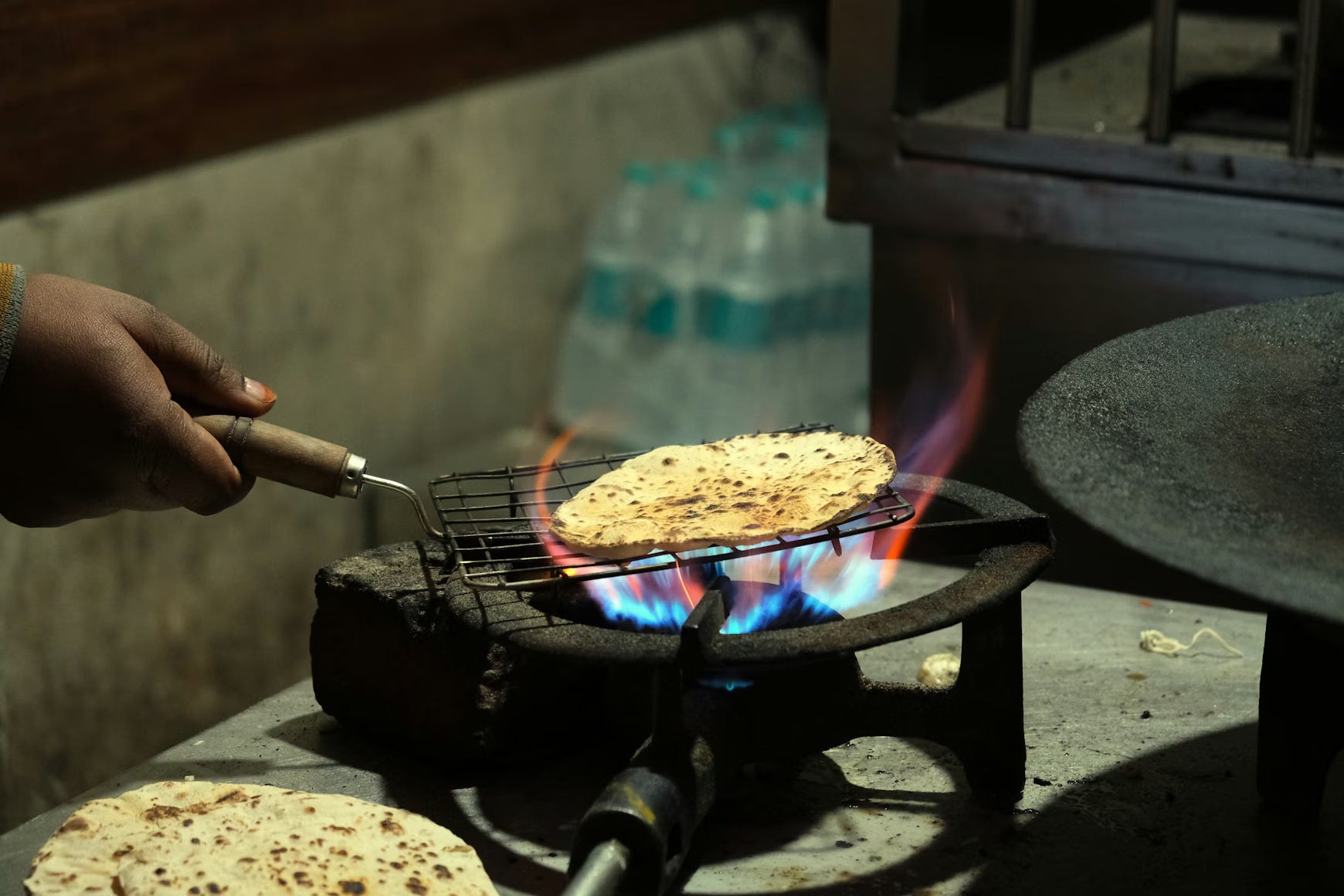
India, which once cooked on firewood and dung cakes, now makes its meals on gas stoves. The shift happened in no small part through a flagship Modi government programme.
Cylinders of LPG – liquefied petroleum gas, a mixture of propane and butane – are now the primary cooking fuel for over 330 million Indian households.
Just one problem.
About 90% of India’s LPG comes from the Gulf. Qatar alone provides a third, with the UAE, Saudi Arabia, and Kuwait supplying most of the rest. All of it ships through Hormuz. At least it did.
Alternative supplies do exist – the world’s largest LPG producer is the United States, and India already signed a deal to source about 10% of imports from American suppliers starting this year. But a shipment from America’s Gulf Coast takes three to four weeks versus a few days from Qatar.
And India’s long-term supply contracts are overwhelmingly tilted Gulf-ward. With crude oil, Russia provides a ready alternative at scale through an existing tanker network. There isn’t LPG floating around waiting to be snapped up. Any potential alternative producers just don’t have the spare volume to ship 2 million tonnes of the stuff a month at short notice.
Plus the Indian government can’t do what they’ve done with petrol and diesel, and freeze prices for six months with state-owned oil companies picking up the losses.
No, with LPG, the problem isn’t expense but physical existence. You can’t subsidise an empty cooking-gas cylinder.
