

America Is Burning Through Its Best Weapons Faster Than It Can Build Them
The war on Iran, interceptor economics, and the unravelling of US alliance credibility

Grüezi!
If the war on Iran ends quickly, the munitions expended are a one-off capital cost, eliminating a major threat.
But if this grinds on, the US faces a problem that’s been building for years.
It is running through hard-to-replace armaments faster than it can build them, whilst adding new, poorly considered military commitments.
And all the while, it is signalling indifference to the old alliance obligations its weapons were supposed to underwrite.
1. The Burn Rate
Two categories of munitions matter in this discussion, and they need to be kept separate.
On the offensive side:
America is using precision-guided strike munitions — JDAMs, JASSMs, JSOWs and Tomahawks — to destroy Iranian military infrastructure.
These come from very large stockpiles (tens of thousands of JDAMs, for example) and production lines that are relatively mature.
Operation Rough Rider against the Houthis burned through over $1 billion of these types of munitions in its first month, and the Iran war is on a much larger scale, but the US offensive magazine is deep.
On the defensive side:
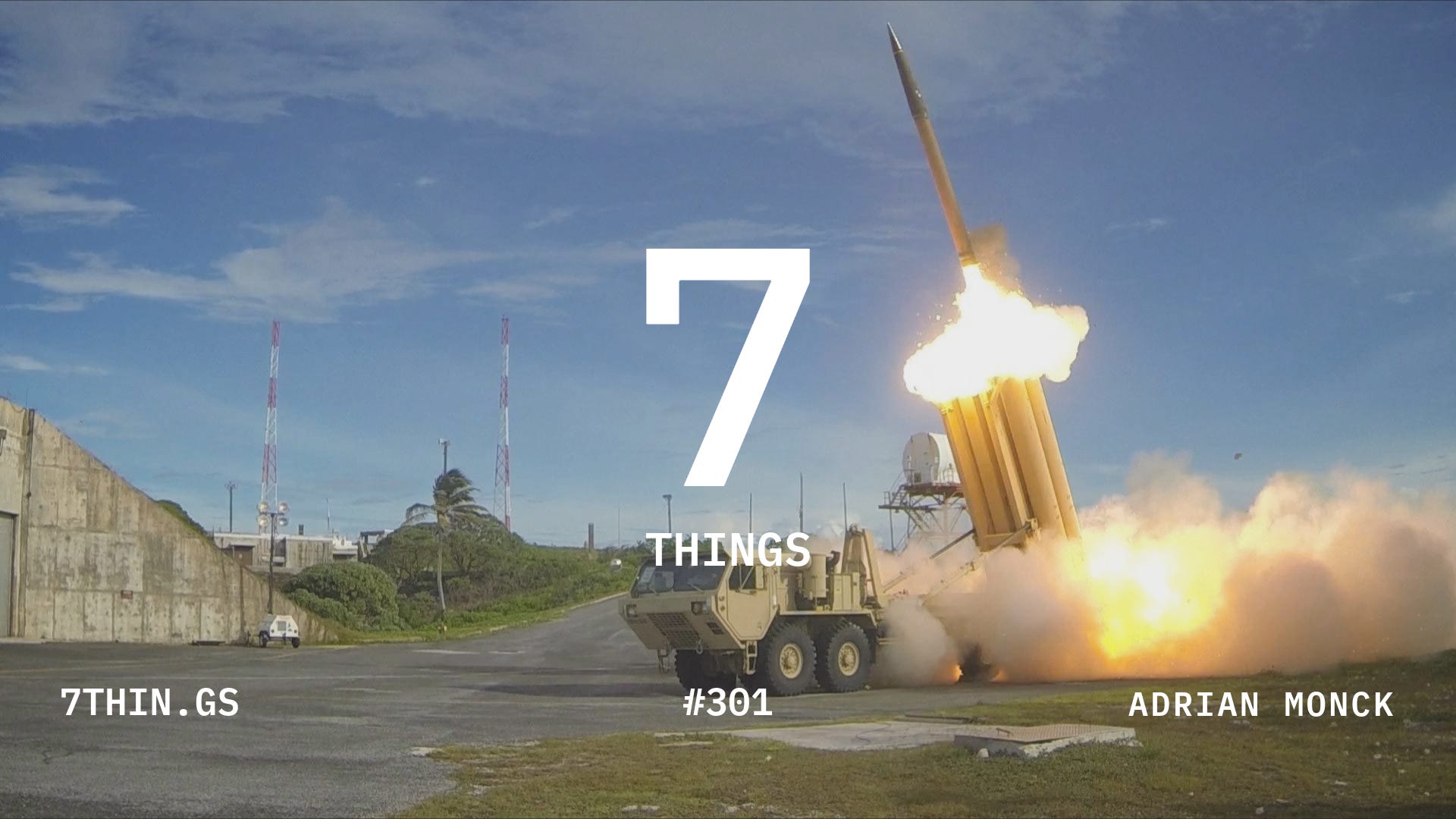
When it comes to the interceptors used to shoot down incoming Iranian missiles and drones, the picture is different. The US runs two main interceptor systems. The Patriot (PAC-3) handles cruise missiles, shorter-range ballistic missiles, and lower altitude drones. And then there’s Terminal High Altitude Area Defense (THAAD), which intercepts medium and intermediate-range ballistic missiles during their final descent. Different batteries, different production lines, and different price points.
As of December 2025, the US had 534 THAAD interceptors. The Twelve-Day War last June got through perhaps a quarter or more – an estimated 92 to 150 – in under a fortnight. Annual THAAD production at that time was 96 missiles, so perhaps it’s made up 50 or so.
In the first 24 hours of Epic Fury alone, Gulf state defence ministries reported intercepting 282 ballistic missiles and 833 drones; by day three, CENTCOM’s figures were even higher. A Stimson Center analyst estimates that at Twelve-Day War rates, the US would halve its entire interceptor stockpile in just over a month.
Iran entered the conflict with an estimated 2,500 missiles. Its launch rates have dropped off but not stopped. Writing in late February, just days before Epic Fury began – The Walla’s military correspondent Amir Bohbot, drew a lesson from last June’s Twelve-Day War: Iran had lost its air defences, including advanced Russian S-300s, in the war’s opening hours and deliberately pivoted to attrition.
The Economist’s analysis of 1,860 launches shows exactly that now. The drone-to-missile ratio has shifted from 1:1 in the first days of the war to 10:1 now – Iran is sending in drones to whittle away interceptor stocks, possibly before returning to ballistic missiles later.
Israeli intelligence reckoned Iran had more than 10,000 drones in reserve before the war began; some analysts believe tens of thousands.
If that’s right, then Iran’s attrition runway is pretty long.
2. The Cost Trap
Even short wars aren’t cheap to defend.
A $4 million Patriot round to destroy a $50,000 Shahed. A $12.7 million THAAD interceptor against a ballistic missile that Iran can build for a fraction of the price. An attacker spends thousands; a defender spends millions.
Israel has done something to get down the cost gap – its interceptors are a quarter of the price of American ones. David’s Sling is $1 million against a PAC-3, and an Arrow-3 runs to about $3 million per round compared to a THAAD.
But allies who can’t build their own high-end systems are locked into expensive and unreliable American protection.
This isn’t unique to Operation Epic Fury — it’s modern air warfare: cheap offence plays expensive defence.
Iran manufactures at volume and its Shahed design scales, as Russia has demonstrated. By mid-2025, Russia’s Alabuga factory alone was knocking out over 5,500 Shahed-style drones every month. By January 2026, according to Ukrainian intelligence, total Russian drone production capacity was over 400 per day.
That same month, Lockheed Martin signed an agreement to up THAAD output to 400 per year, and boost PAC-3 production from 600 to 2,000 annually.
The new Munitions Acceleration Center in Camden, Arkansas, covering THAAD, PAC-3 and other weapons systems, has only just broken ground.
Even these modest increases will take years.
America first. Allies will have to wait.
3. Pain Relief From Ukraine
There is a counter to the low-end cost crisis, and it’s Ukrainian.
In February, Ukraine’s Commander-in-Chief Oleksandr Syrskyi announced that interceptor drones had accounted for over 70% of the Russian Shahed knock-offs brought down over the Kyiv region.
Ukraine’s defensive drones are small, 3D-printed airframes that cost €1,000 to €4,000. They ram incoming drones in the air. Ukraine’s National Security and Defence Council says the country produced 100,000 of them in 2025, with production capacity growing eightfold. Frontline units receive over 1,500 of them every day.
Ukrainian manufacturers claim they have the capacity to export 5,000 to 10,000 monthly without affecting their domestic needs.
Unlike THAAD, these systems are built from commercial components on production lines that can scale rapidly. The Pentagon and Qatar are already in talks to buy them. Britain is sending Ukrainian counter-drone experts to help Gulf partners.
Zelensky has offered operators and technology in exchange for Patriot missiles and diplomatic leverage over Moscow – noting that in three days of Gulf fighting, more than 800 Patriot missiles were used, more than Ukraine has received across the war.
Germany’s TYTAN Technologies is aiming for 3,000 interceptor drones monthly by end of 2026 but is still ramping up. The EU’s Drone Defence Initiative targets first operational capabilities by end of 2026.
As for Turkey, it claims 65% of the military drone export market (a figure from Baykar’s chairman) but its production lines build reusable $5 million combat drones, not cheap interceptors. Its industrial base could pivot, but it hasn’t yet.
Only Ukraine can deliver at scale right now.
